French Drain Outlet Options in Prosper, TX
A French drain is only as good as the place it empties. In Prosper that place is set by how the Town had your lot graded, and Prosper Drainage checks it before quoting a single foot of trench.
Your French drain outlet options in Prosper are the street curb, the rear swale or drainage easement, a pop-up emitter at a lower spot, or a sump pump when nothing on the lot is lower than the trench. Your neighbor's yard is never one of them, and a dry well seldom works in this clay. Which of the first four fits depends on your lot grading type.
Start With Your Lot Grading Type
Section 6.14 of the Town of Prosper's Engineering Design Standards strictly prohibits residential lot-to-lot surface drainage and shows three lot grading patterns that new subdivisions are built to. Your builder's grading plan or the subdivision construction plans name the type for your lot; the arrows on the plat or a look at which way the side swales fall usually tell you too. The type decides which French drain outlet options are even on the table.
| Lot type | Where the Town's plan sends water | Usual French drain outlet | What to watch |
|---|---|---|---|
| Type A | All drainage to the street | Solid pipe down the side yard to the curb, or a pop-up emitter in the front yard or parkway | The side swale between houses is the only path. Fences and landscaping that flatten it cause most of the wet side yards in Prosper. |
| Type B | Front half to the street, rear half to the rear lot line | Front-yard problems go to the curb; back-yard problems go to the rear swale, alley or easement | Water on the wrong side of the split has to be carried around the house to reach its outlet, which adds length and fall. |
| Type C | All drainage to the rear lot line | The rear swale, alley or drainage easement the lot was built to back onto | Only allowed where the lot backs onto an alley, open space or a drainage easement. HOA common ground behind the lot may still restrict new pipe outlets. |
Source: Town of Prosper Engineering Design Standards, Section 6, Drainage System Design Requirements, Section 6.14 and Figure 6.8.
Outlet 1: The Street Curb

On Type A lots, and the front half of Type B lots, the curb is where water was always meant to go. The French drain runs to a solid, unperforated line that crosses the front yard and parkway and exits through the face of the curb into the gutter. The Town's own grading drawings show the parkway slope and the back of curb inside the street right-of-way, which is why a new curb opening is a question for the Town's Engineering Services before it is a question for a saw.
Curb outlets fail in a predictable way: the last few feet of pipe sit shallow under the parkway, where mowers, vehicles parked over the curb and seasonal clay movement crush or lift them. A crushed outlet makes the whole drain back up even though the trench is fine, so it is the first thing to check on a slow drain. Our French drain repair and cleaning page covers clearing and replacing outlets.
Outlet 2: A Pop-Up Emitter at a Lower Spot
A pop-up emitter is a round cap at the end of a buried solid line. Water pressure lifts the lid and lets the water spill onto the surface; when the flow stops, the lid drops back flush with the grass. It suits Prosper lots where the curb is far away or awkward to reach but the front yard or parkway still sits lower than the trench.
Two cautions apply on this clay. The ground around an emitter stays wet after storms, because the water surfaces there and the soil is slow to take it in, so it belongs where a damp patch does no harm and the water keeps flowing toward the street. And every inch the emitter sits above the trench bottom is fall the pipe has lost, so it only works when there is real height difference to spend.
Outlet 3: The Rear Swale, Alley or Drainage Easement
Type C lots, and the back half of Type B lots, were designed to shed water to the rear lot line, which the Town only allows where there is an alley, open space or a drainage easement behind the lot. A French drain on these lots usually ends in that rear swale or easement rather than at the street.
Two rules shape this. The Town treats storm lines that cross property lines and collect neighbors' runoff as public, with easements dedicated to the Town, so a private pipe run across someone else's lot is not a handshake arrangement. And many Prosper HOAs restrict new outlets onto greenbelts, trails and lake edges they maintain. The Collin County drainage permit guide covers when that turns into paperwork.
Outlet 4: A Sump Pump When Nothing Is Lower
Some Prosper back yards sit below the curb, often where a lot was built up at the front and left low behind the house. Gravity cannot carry water uphill, so the French drain ends in a buried sump basin and a pump lifts it through a solid line to the curb. It adds a moving part and a power supply to the system, which is why it comes after the gravity options, not before. See sump pump installation in Prosper for pump types and backup.
Why a Dry Well Rarely Works in Prosper Clay
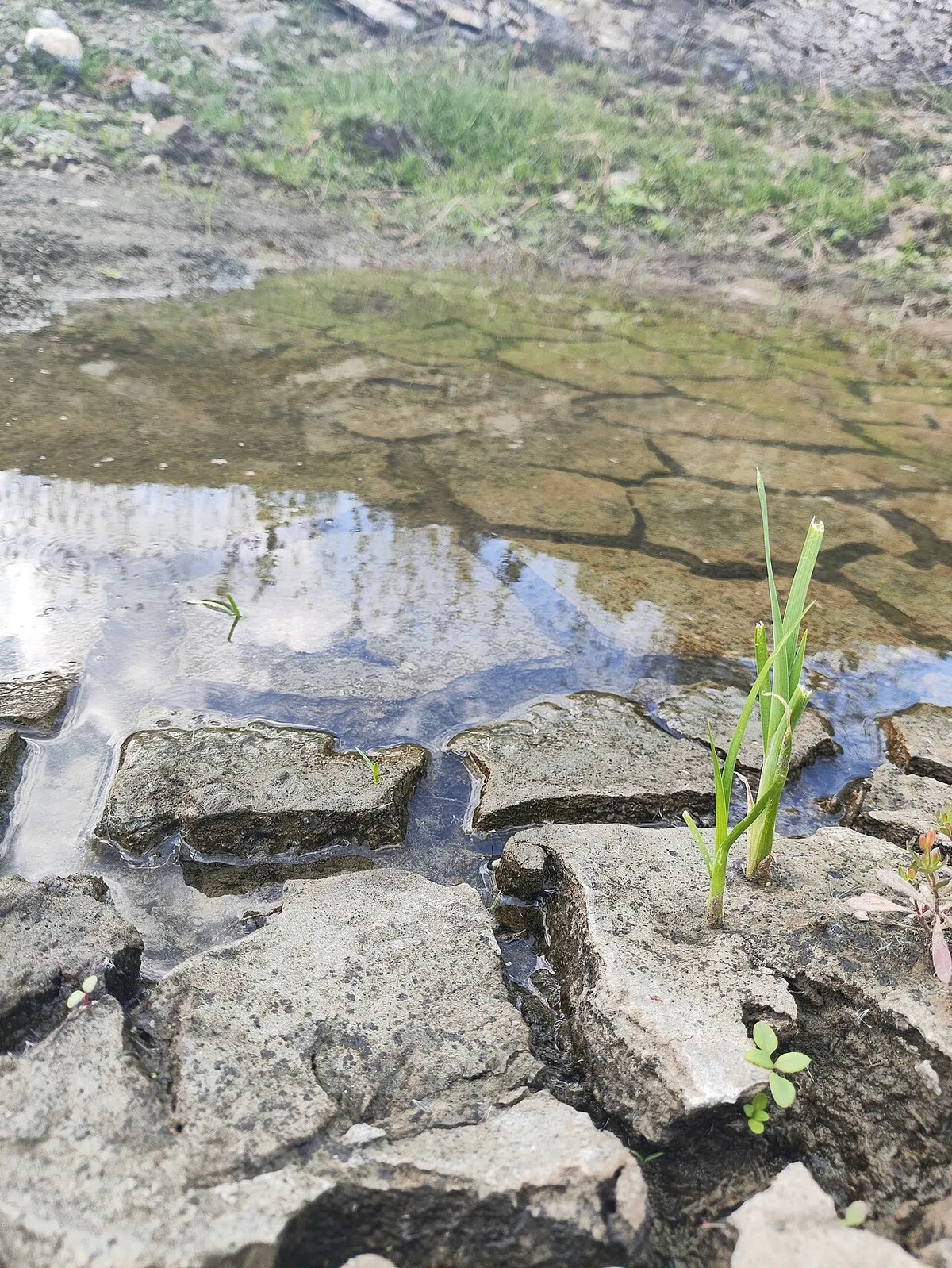
A dry well is a buried, gravel-filled pit or plastic chamber that holds drain water until the surrounding soil soaks it up. In sandy ground that works. The USDA's official description of Houston Black, the clay under most of Prosper, says water enters it rapidly when it is dry and cracked and very slowly when it is moist, and rates its permeability as very slow.
That is the wrong way round for a dry well. In late summer the pit drains because the clay is cracked open, but in a wet spring, when a French drain is working hardest, the soil around the pit is already wet and swollen shut. The pit fills, stays full, and the drain behind it stops. LawnStarter puts dry wells at $500 to $3,000; in this soil that money is better spent on a curb outlet or a pump.
The Outlet That Is Off the Table: Your Neighbor's Yard
Texas Water Code Section 11.086 says no person may divert or impound the natural flow of surface waters in a manner that damages the property of another by overflow, and gives the injured owner remedies at law and in equity, including damages. Prosper's design standards back it up by prohibiting residential lot-to-lot surface drainage outright.
In practice that means a drain that dumps at the fence line, or a regrade that pushes water onto the next lot, is a liability rather than a fix. If the neighbor's water is the problem, the drain should intercept it on your side and carry it to your own legal outlet.
French Drain Outlet Options in Prosper: Five Questions Before You Sign

- Where exactly does the water come out? The outlet should be marked on the quote and on the sketch your HOA sees.
- How much lower is it than the start of the trench? The pipe needs at least 1 inch of fall every 8 feet the whole way; a long run to a far curb can use it all up.
- Does it match your lot grading type? A rear outlet on a Type A lot, or a street outlet on a Type C lot, means pipe running against the lot's design.
- Does any part cross the curb, parkway or an easement? Those are Town or HOA questions, settled before the dig date.
- Has 811 been called? Texas requires the call 48 hours before excavation, and outlet lines cross the front yard where gas, water and cable run.